WHAT YOU NEED TO KNOW
- War Secretary Pete Hegseth will chair the Pentagon’s new Homeland Defense Board, which may include as many as 20 members.
- The board will provide military advice on homeland defense, domestic security preparedness, infrastructure, resource allocation and cooperation across the Americas.
- Founding documents say existing federal panels cannot adequately advise leaders about domestic troop deployments or military campaign strategies in the Americas.
- The panel follows Hegseth’s March 2025 dismissal of existing advisory board members for a review of necessity and warrior ethos.
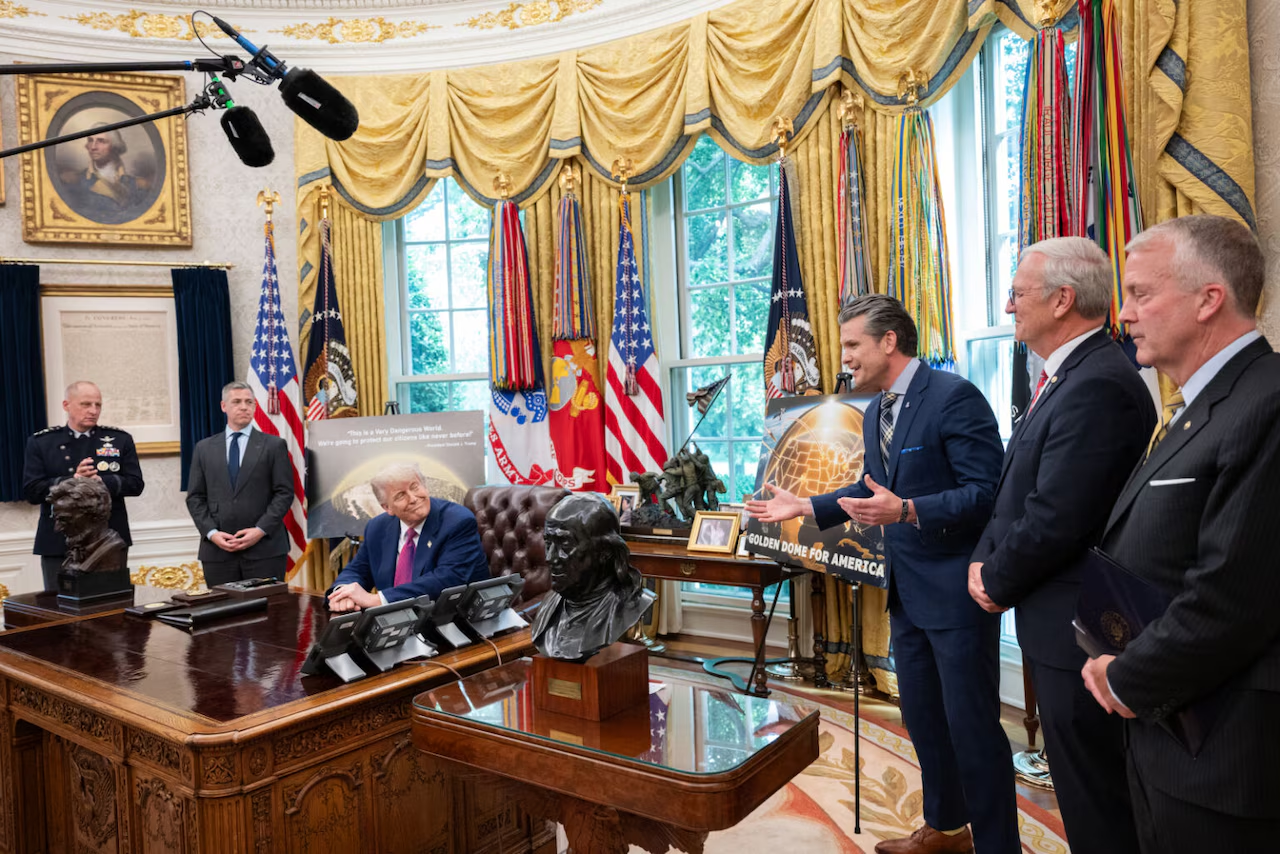
War Secretary Pete Hegseth will chair a new Pentagon advisory committee focused on homeland security and defense, following his review of existing advisory panels last year.
The Homeland Defense Board is intended to provide military guidance for missions involving the United States homeland.
The board was announced in the Federal Register on Sept. 11.
Establishing documents argue that current federal advisory committees and government agencies cannot provide the integrated military advice Hegseth requires.
“The specific, integrated advice required by the SecWar regarding the military’s mission of defense of the Homeland and Homeland security cooperation is not available from any other Federal advisory committee, government agency, or alternative source,” the documents state.
The Trump administration prefers the names Department of War and Secretary of War for the agency and its leader.
Legislation that would legally change the agency’s name remains pending in Congress.
FREE Gun Law Map: Laws Don't Pause During Social Unrest
According to the establishing documents, other agencies operate within particular missions or geographic areas, but their advisory systems are legally restricted to their respective nonmilitary domains.
The documents also contend that internal DoW staff and contracted studies cannot deliver the independent external review sought by senior leaders.
“Relying solely on internal DoW staff or contracted studies is also insufficient, as it fails to provide the consensus-based, independent, and external peer review required at the highest levels of strategic decision-making,” the documents state.
The Homeland Defense Board may include as many as 20 members. Hegseth will serve as chairman, while the assistant secretary of war for Homeland Defense and Americas Security Affairs will serve as vice chairman.
The deputy assistant secretaries of war for Homeland Defense and Defense Continuity and Mission Assurance will also hold positions on the panel. Each military branch will provide one civilian and one field or mid grade officer.
Establishing documents also permit the Secretary of War or the Deputy Secretary of War to appoint or designate additional members. When asked about the board’s creation, a Pentagon official said the department had “nothing to provide.”
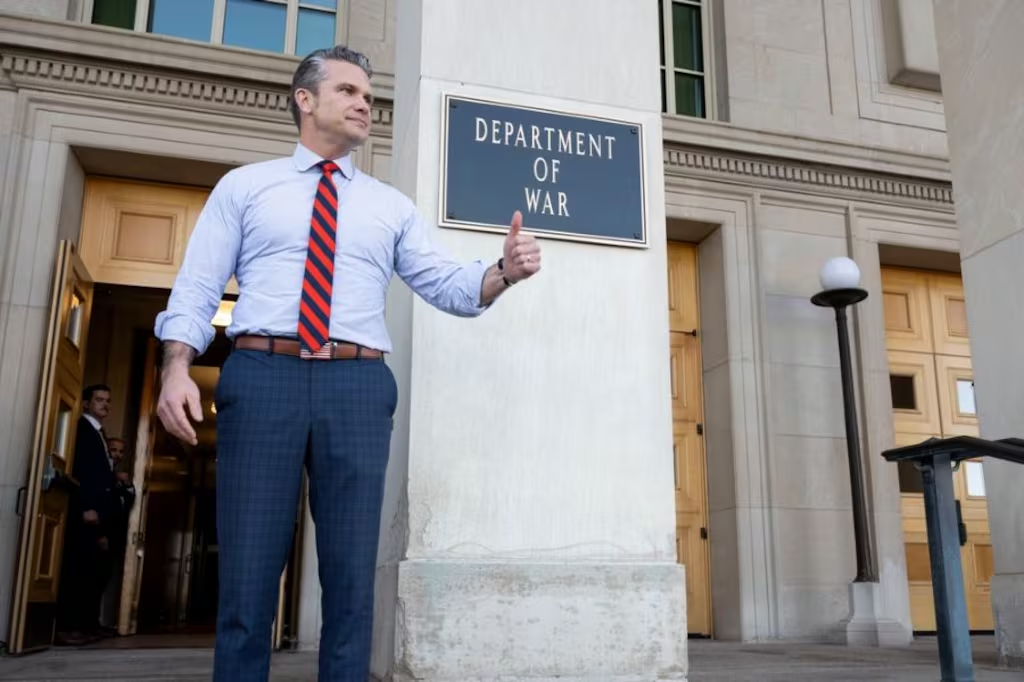
The board is the Pentagon’s first advisory panel specifically focused on homeland security. Its founding documents maintain that the Department of Homeland Security’s Homeland Security Advisory Council cannot meet the military’s requirements because it concentrates on civilian law enforcement.
That council also “lacks the mandate to advise on Title 10 or Title 32 [domestic troop] deployments” and military specific emergencies, according to the documents.
The Department of State’s International Security Advisory Board is similarly described as “underequipped” to develop military campaign strategies for the Americas because of its emphasis on diplomacy and arms control.
The board’s justification points to increasingly complicated dangers involving peer, near peer and rogue state adversaries, along with nonstate actors and hostile asymmetric activities. It says those threats have grown more intense and complex during the past 10 years.
The documents state that the DoW maintains a premier global warfighting force to provide a layered defense for American citizens and the homeland. They add that the board will independently assess the department’s defensive position in the hemisphere and its domestic security preparedness.
MORE NEWS: CNN, MS NOW and Politico Launch First Amendment Showdown After White House Boots Reporters
Recent missions have increasingly crossed traditional departmental boundaries.
The source identifies large scale National Guard deployments to American cities supporting law enforcement, continuing troop deployments along the southern border and an aggressive expansion into drug interdiction missions traditionally conducted by the U.S. Coast Guard.

The establishing memo suggests the board will provide a bridge between the War Department and the Department of Homeland Security that did not previously exist.
It will advise Hegseth on security cooperation, resource allocation, foreign influence, transnational criminal networks and partner nation military capabilities.
“Finally, the HDB’s advice and recommendations will serve an essential function by bridging the gap between the military and domestic Homeland security agencies to secure the defense critical infrastructure, vital transport networks and logistics nodes and the defense industrial base. Without this advisory body, the DoW risks strategic blind spots in its primary mission to protect the Homeland.”
The General Services Administration reports that roughly 40 federal advisory committees now serve the Pentagon.
In March 2025, shortly after taking office, Hegseth dismissed all members of existing boards while conducting a “zero-based review” of their necessity and contribution to “ warrior ethos .”
The opinions expressed by contributors and/or content partners are their own and do not necessarily reflect the views of BoredTrashPanda.com. Contact us for guidelines on submitting your own commentary.
Join the Discussion
COMMENTS POLICY: We have no tolerance for messages of violence, racism, vulgarity, obscenity or other such discourteous behavior. Thank you for contributing to a respectful and useful online dialogue.